

Outdoor Fitness Equipment for Parks: 4 Mistakes to Avoid When Installing an Outdoor Fitness Park
Outdoor fitness equipment is a fantastic addition to any public park. When planning is done correctly, it can increase park usage, support community health, and maximize your return on investment. However, with these countless benefits in mind, it is important for municipalities to not undermine their own projects by making certain avoidable mistakes. In this blog, we’ll look at four common mistakes made when installing outdoor fitness equipment and how to avoid them.
Why Proper Planning Matters for Outdoor Fitness Parks
Mistake #1: Poor Placement of Outdoor Fitness Equipment
Outdoor fitness equipment in a public park has the best return when it is:
- Within proximity of amenities such as playgrounds, sports fields, picnic tables, benches, trails, and more, so that it feels like a natural part of the park, not an add-on
- Close to parking lots or park entrances so park goers don’t have to travel far or search for the equipment
- Visible from the nearby road to attract newcomers to the outdoor fitness site
When equipment is in hidden or underused areas of the park, low usage can be expected. Strategically placing equipment makes it feel like a main part of the park, not just a secondary amenity.
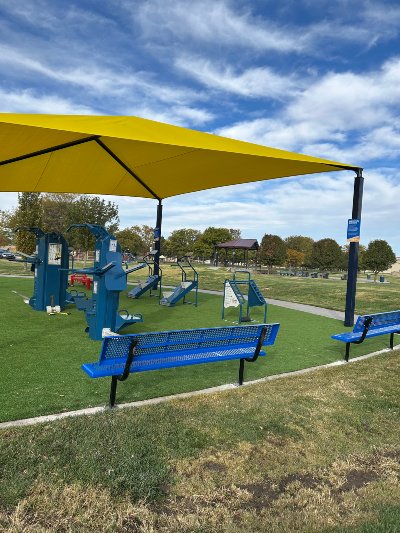
Mistake #2: Incorrect Installation or Missing Safety Surfacing
Most outdoor fitness equipment must be securely anchored to ensure safety, stability, and long-term durability. Depending on the type of equipment, installation usually involves surface mounting or direct burial. Surface mounting anchors the equipment to an existing concrete pad, while direct burial places the bottom of posts below grade in concrete footings to create a durable, long-lasting foundation. The surfacing placed around and above these foundations impacts safety, accessibility, and maintenance costs.
Common installation mistakes can include:
- Not consulting with a concrete expert or qualified installer to determine the proper mounting method
- Overlooking drainage considerations leading to unwanted water pooling and, in some cases, surfaces needing to be prematurely replaced
- Failing to include proper safety surfacing based on the equipment at your specific site
To maximize your outdoor fitness park, include safety surfacing that:
- Meets fall height and safety requirements of equipment with elevated platforms and helps absorb impact in the event of a slip or fall, reducing the risk of injury
- Supports wheelchairs and other mobility devices by providing firm, stable, and slip-resistant pathways around the equipment
A lack of high-quality surfacing can lead to a less inviting site and user frustration. Including a durable, compliant safety surfacing from the start will increase use and the overall return on investment of the outdoor fitness site.
Mistake #3: Ignoring Accessibility in Outdoor Gym Equipment Design
Fitness is for everyone, regardless of their abilities. Outdoor fitness equipment should serve the entire community, and not just highly athletic users.
Unfortunately, many outdoor fitness installations:
- Exclude users with mobility challenges
- Offer strictly bodyweight equipment and fail to provide entry-level exercise options
- Lack instructional signage
To fix these issues and be inclusive for all abilities, make sure your equipment has:
- Products usable from a seated position that allow wheelchair access
- Adjustability for beginner-friendly users so that everyone can exercise regardless of prior fitness level
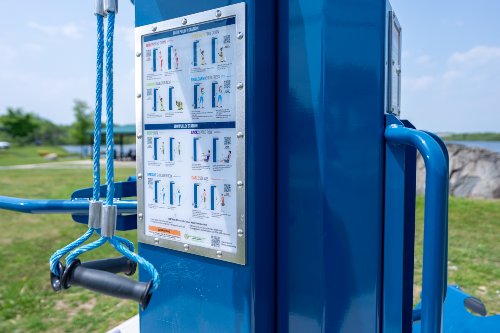
- Clear instructional signage that shows how to properly perform the exercises at each station, with key points indicated
- Layout with wide access pathways that are easy to maneuver with no obstacles or obstructions
Mistake #4: Prioritizing Cost Over Quality
Like many long-term investments, outdoor fitness equipment can vary in design, materials, and quality. Budget considerations are often a major factor in choosing equipment for your site, but focusing solely on the upfront cost can lead to challenges throughout the installation's lifespan. In certain cases, selecting equipment only because of a lower price can result in:
- Short life span of equipment
- Secondary costs from constant maintenance
- Poor exercise quality
To make the most of an outdoor fitness site, things to remember to look for when choosing your equipment should include:
- Durability of equipment backed by a strong warranty
- Tamperproof features, no removable parts, no pinch points or crush zones
- Adjustability to cater to every user
- Variety of exercises available
- Little to no maintenance required
Here at Outdoor-Fit, we design our equipment specifically to withstand heavy use in public environments. Durability, tamperproofing, and inclusivity are three key pillars of our process. Even with all of this considered, the best equipment can underperform without thoughtful planning.
To learn more about our outdoor fitness equipment and let us help you plan the perfect outdoor fitness park, click the following link to contact us today.
FAQs About Outdoor Fitness Equipment for Parks
Yes! If you’re unsure where to place equipment in your park, provide us with some information, such as dimensions and available budget, and we’d be happy to offer recommendations based on your needs.
No. Outdoor-Fit does not handle installation. However, we have a wide network of parks and recreation dealers across North America with experts who can provide turnkey solutions, including installation. Click here to find the Outdoor-Fit dealer in your area.
Yes! All our products have a 15-year warranty on structural components that covers all climates, and a 2-year warranty on wearable parts such as cables and pulleys.
Yes! Our multigyms, such as the Apollo, Atlas, and Helios, feature adjustable weight resistance to ensure every user can exercise properly regardless of their fitness level.